
SMART mirror with LED lighting
A SMART mirror is essentially a transparent screen built into a mirror that can display useful information.
LED mirrors are probably the most popular smart home project of all. Many people already have one in their bathroom because you're standing in front of the mirror anyway, and seeing information like the time or the outside temperature while brushing your teeth is super convenient.
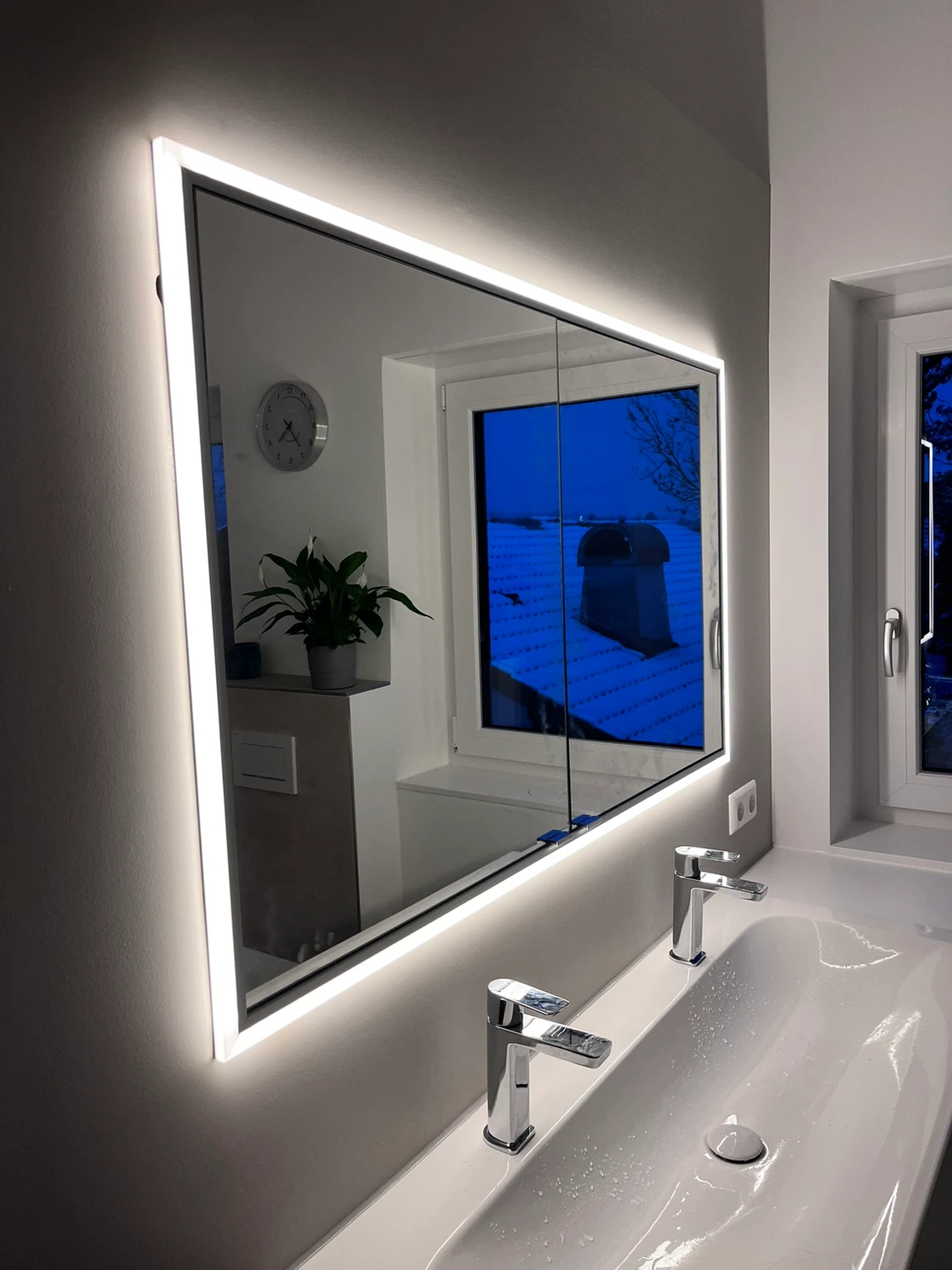
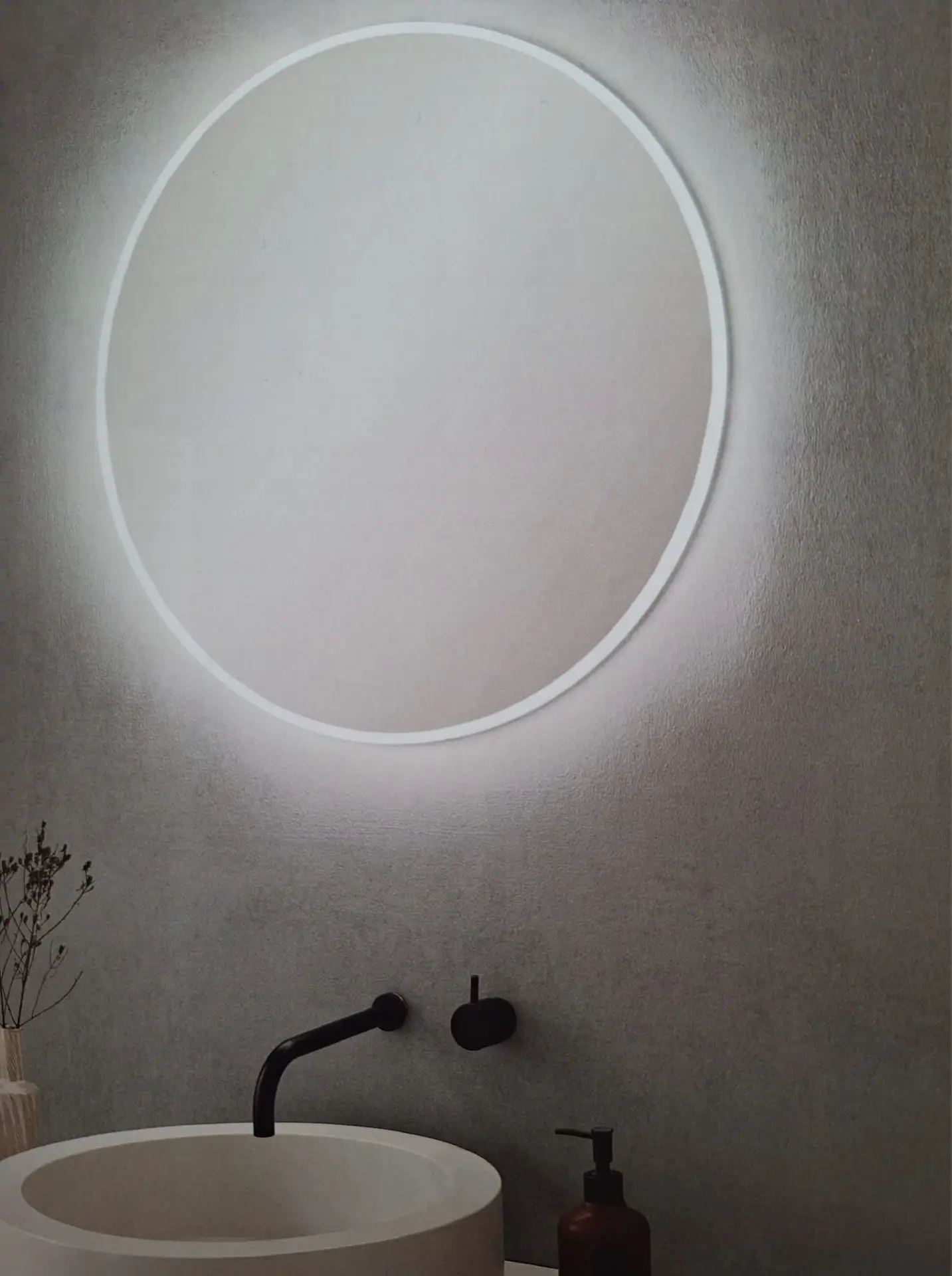
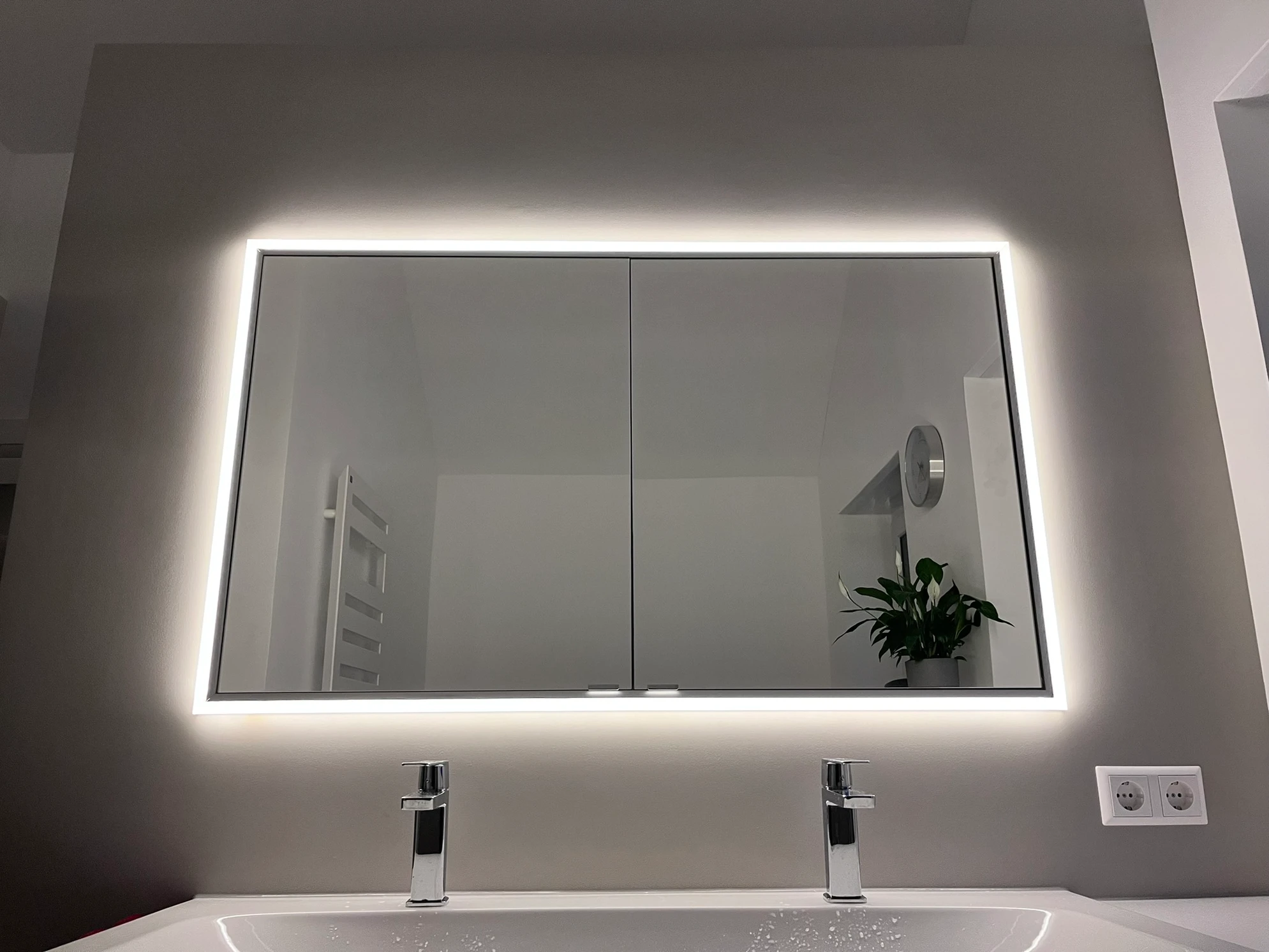
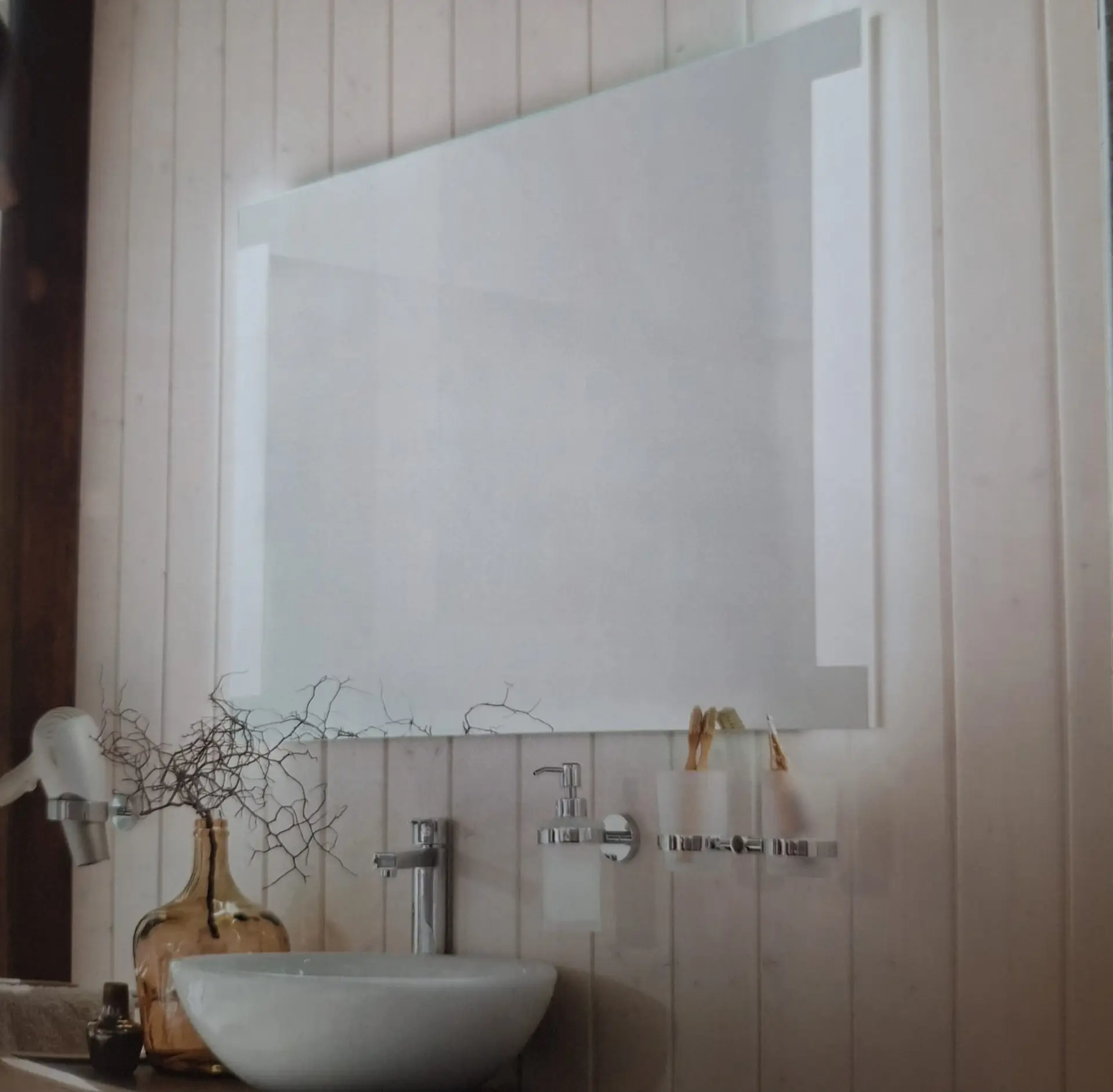
A SMART mirror (also known as Smart Mirror or Magic Mirror ) byMk GlasDesignis a mirror that looks like a normal wall mirror but is actually a digital display with apartially transparent glass mirror.
Behind the mirror glass is a screen (usually a monitor or a Raspberry Pi with an LCD/LED display) that can display information, while the rest of the surface continues to function as a normal mirror.
Advantages of smart mirrors with LED lighting
- Looks super modern and clean (especially in the bathroom or hallway)
- Practical information at a glance
- Control with the cell phone
Mk GlasDesign SMART Line mirror
In addition to a custom-made glass shower, an elegant, modern bathroom naturally calls for a smart mirror.
Smart-Line bathroom mirror with LED lighting and sandblasted edges:
- Dimensions 100 x 70 cm
- with 2 sandblasted sides 6 x 58 cm
- 2240 lumen
- 30 watts
- LED lighting White light adaptation emits light to the front and side
- Switching via contactless sensor switch
Smart-Line 4.0 LED bathroom mirror with all-round lighting
- Dimensions 120 x 85 cm
- with all-round LED lighting
- Sandblasting width: 10 mm
- 7200 lumen
- 80 watts
- LED lighting neutral white
Most Smart Mirrors run with open source software such as MagicMirror² (the most popular platform) or proprietary solutions and display the following things, depending on model and preference:
- Time and date
- Weather Forecast
- Calendar appointments (Google Calendar, Outlook etc.)
- News feeds (RSS, Tagesschau, etc.)
- To-do lists or reminders
- Traffic information / commuting time
- Fitness tracker data (steps, heart rate)
- Smarthome control (lights, heating, etc.)
- Voice control (e.g. with Google Assistant, Amazon Alexa or your own microphone)
- Camera for gesture control or facial recognition ("Good morning, Max - here are your appointments")
- Spotify or radio widget, YouTube, Netflix, etc.
What does that look like technically?
A typical Smart Mirror consists of:
- Frame + Mirror: A picture frame with a two-way mirror (partially transparent)
- DisplayOld monitor, TV or inexpensive Raspberry Pi display
- Computer: Raspberry Pi (4 or 5 is ideal) Intel NUC
- SoftwareMagicMirror²( free, modular, thousands of modules from the community), Dakboard, or your own web app.
- Optional: microphone + loudspeaker for voice control, LED ring lights, touch foil, NFC reader, etc.